

We couldn’t find that story — it may have moved since the link was made. Here is one of our recent pieces instead, or see them all.
Advancing Biogas Solutions for a Cleaner Tomorrow
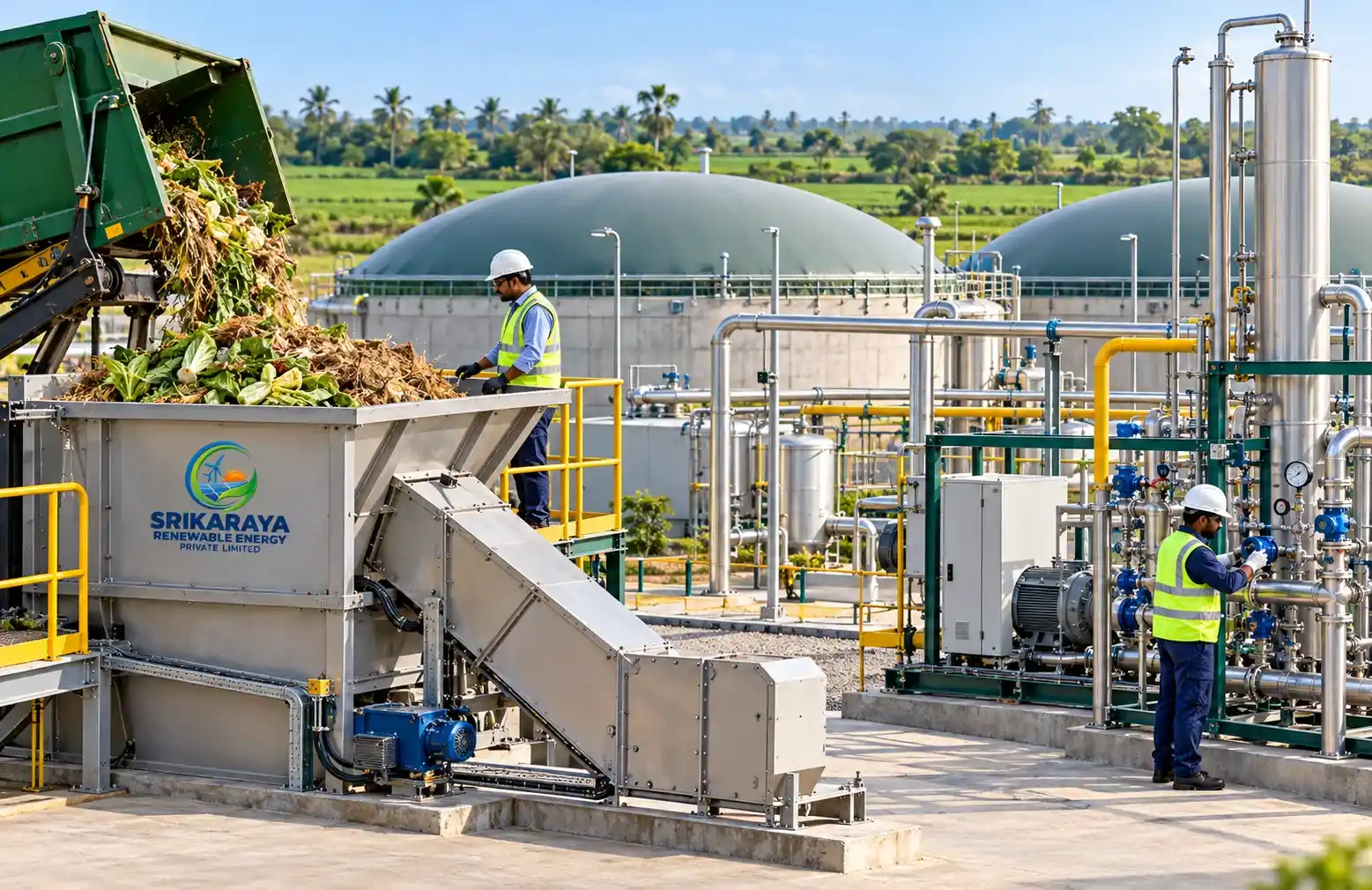
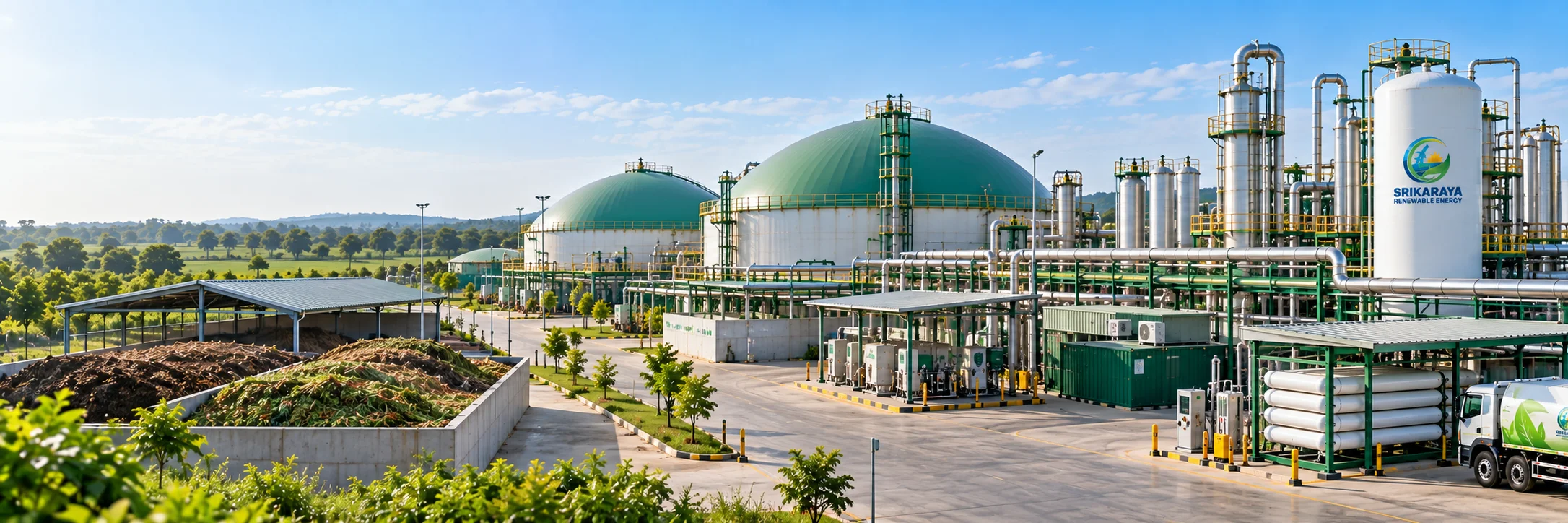
Srikaraya Renewable Energy has commissioned a new biogas plant that will convert organic waste into clean energy for the surrounding district — the latest step in a programme that treats waste as a resource rather than a problem.
The plant takes in segregated food and market waste alongside agricultural residue, and runs it through anaerobic digestion to produce biogas, which is then upgraded to bio-CNG. What is left is not a waste stream either: the digestate is processed into bio-fertiliser and returned to the farms that supplied the feedstock in the first place.
At a glance
- A new plant commissioned, converting segregated organic waste into bio-CNG.
- Digesters sized against a full season of measured feedstock, not a peak figure.
- Digestate processed into bio-fertiliser and returned to supplying farms.
- Performance testing to follow before handover to the operations team.
Built around the feedstock that is actually available
Every plant in the portfolio is designed around what a district can reliably supply, rather than around a headline capacity figure. Before the design was fixed, the team characterised the local waste streams over a full season — solids, volatile solids, carbon-to-nitrogen ratio — and sized the digesters against the supply that held up across all of it, not the peak.
That discipline is what keeps a plant running at its rated output once the opening ceremony is over. A digester sized for feedstock that never turns up is a stranded asset; one sized honestly keeps earning.
What it means for the district
- Organic waste diverted from landfill, where it would release methane straight to the atmosphere.
- Bio-CNG that displaces fossil CNG in local transport and industrial heat.
- Bio-fertiliser closing the loop back to the land it came from.
- Skilled local jobs in operations, logistics and maintenance.
Commissioning is under way, with performance testing to follow before the plant is handed to the operations team.
Srikaraya Partners with Local Communities for a Greener Future
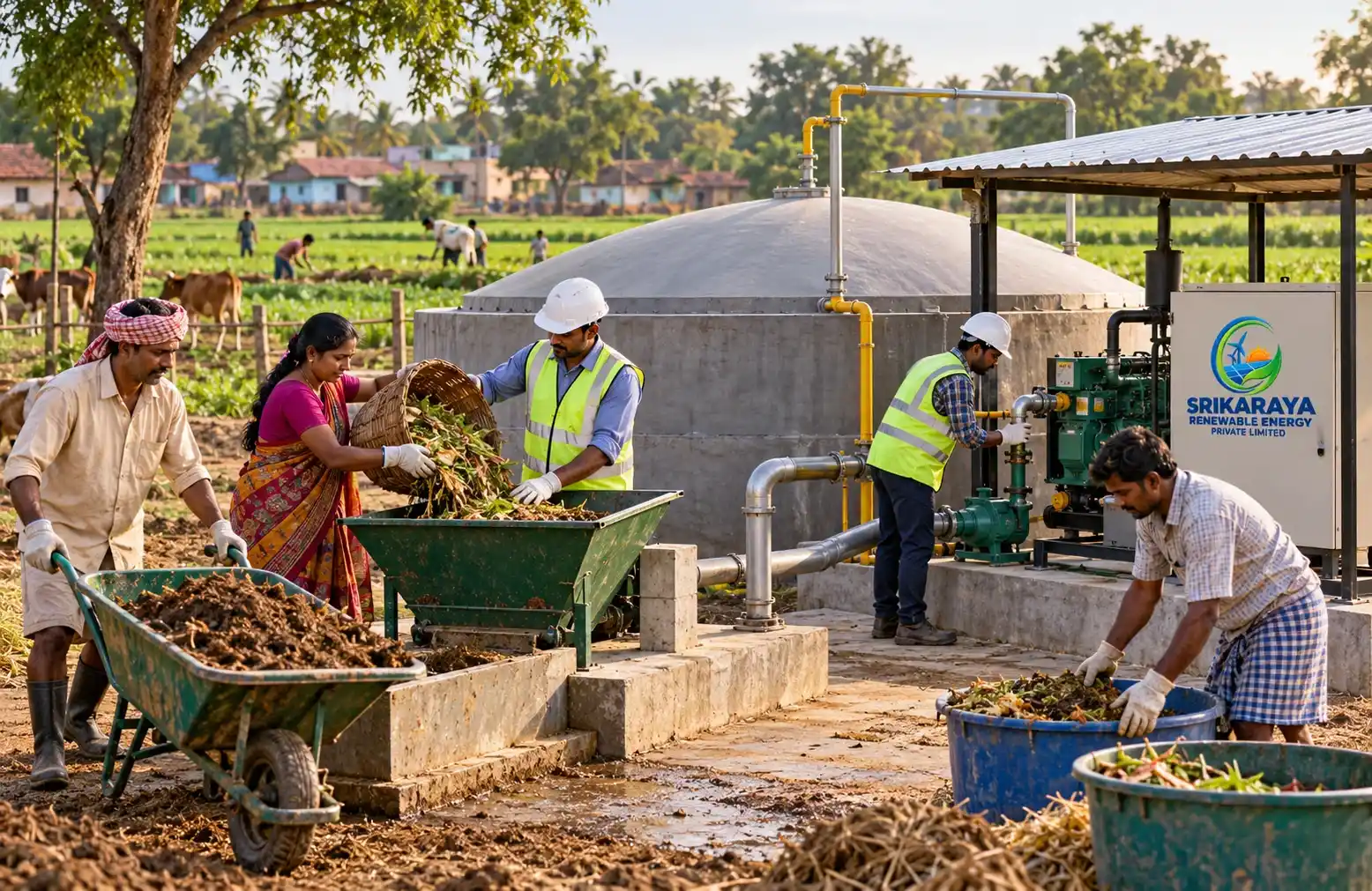
We have signed agreements with local farming cooperatives and municipal bodies to promote sustainable waste management and create green jobs across the districts our plants serve.
A biogas plant is only as good as the supply chain feeding it, and that supply chain is made of people — farmers deciding what to do with crop residue, municipal crews deciding whether waste gets segregated at source, drivers deciding which yard to take a load to. The partnership sets out to make the sustainable choice the easy one.
What the agreements cover
- A guaranteed offtake price for agricultural residue that would otherwise be burned in the field.
- Support for cooperatives in baling and storing that residue.
- A reliable destination for segregated municipal organic waste.
- Help in setting up collection rounds that keep the waste clean enough to digest.
In return, the plants get a feedstock supply they can plan around, which is worth more to an operator than any spot-market saving.
Jobs that stay in the district
Collection, baling, haulage, plant operations and maintenance are all filled locally wherever they can be. Training is run on site, so the skills stay in the district rather than arriving with a contractor and leaving with them.
- Stubble burning falls, and with it the seasonal air quality problem it causes.
- Landfill load falls as organic waste is diverted to digestion.
- The money paid for residue stays in the local economy.
That is the case we make to every new partner, and it is one the numbers support.
The Role of Biogas in Achieving Energy Independence
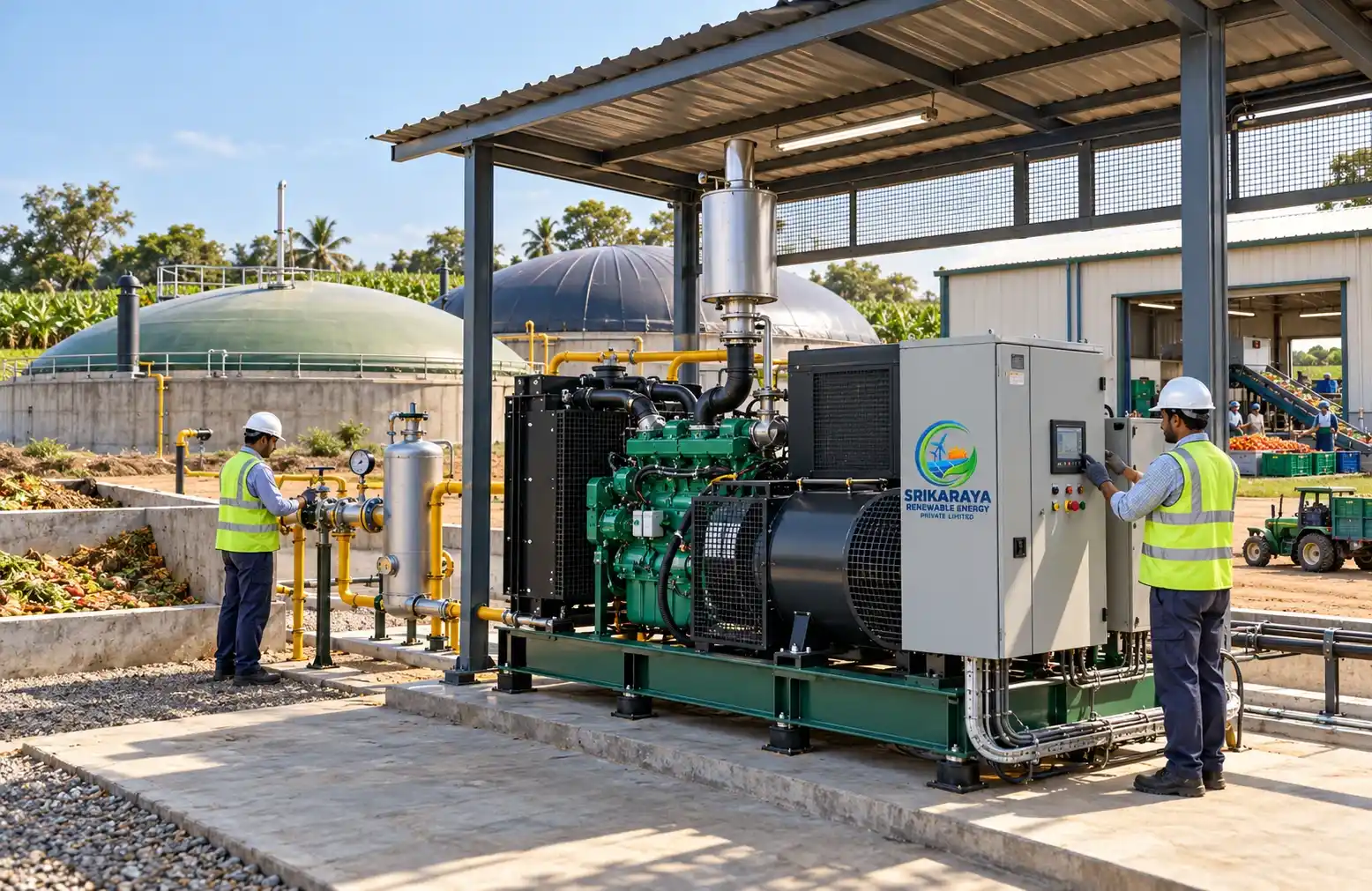
Biogas is changing the way energy is produced and consumed — not by replacing the grid, but by turning a waste problem every district already has into a fuel that never needs importing.
Most renewable generation depends on a resource that arrives when it wants to. Biogas does not. The feedstock is produced continuously by farms, markets, mills and households, it can be stored before it is digested, and the gas can be stored after.
Why that matters
- Feedstock arrives continuously rather than with the weather.
- Both the feedstock and the gas can be stored, so output is dispatchable.
- The fuel is made and sold inside the same region — no import bill, no shipping route, no exchange-rate risk.
- Plants can be built at district scale, close to both the waste and the demand.
The part that is often missed
The energy is only half the output. Digestion also produces bio-fertiliser, which displaces chemical fertiliser — itself largely made from imported natural gas. A plant therefore cuts fuel imports twice over, once directly and once through the fertiliser it takes off the market.
Scaled across enough districts, that is a meaningful shift in where a country’s energy comes from, built out of material that is currently being thrown away.
New Milestone: 10,000+ Tons of Organic Waste Converted
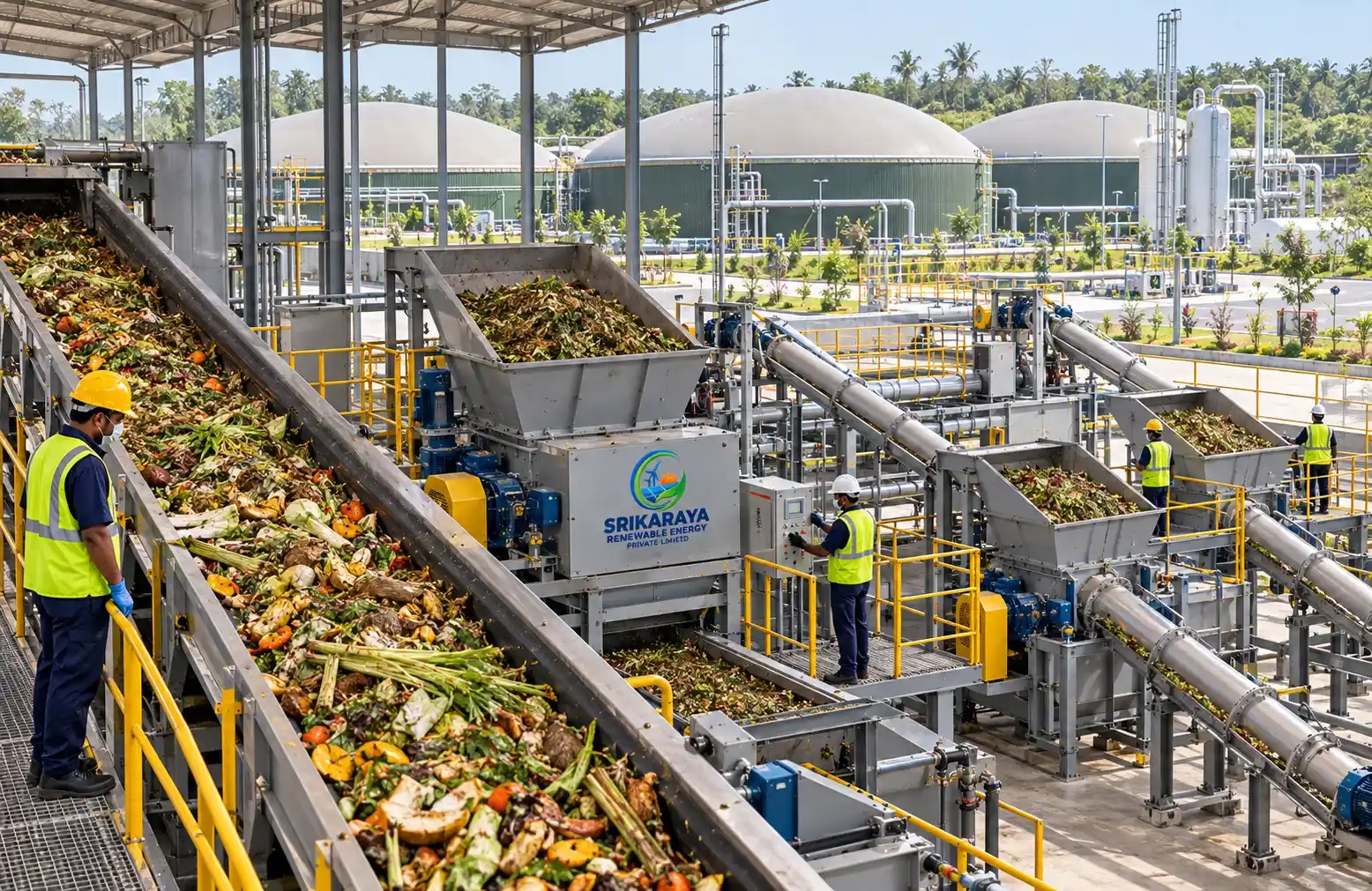
Srikaraya Renewable Energy has passed 10,000 tons of organic waste converted into renewable energy across its operating sites — a figure that belongs to the operations teams and the suppliers who kept the feedstock arriving.
Milestones like this are usually presented as a single number. What sits behind it is less glamorous and more important: uptime. Ten thousand tons is the product of digesters that stayed inside their operating envelope, intake that arrived on schedule, and maintenance that was done before it became a breakdown.
What the waste became
- Bio-CNG, displacing fossil CNG in vehicles and industrial burners.
- Bio-fertiliser, returned to agricultural land — much of it to the same farms that supplied the residue.
- Landfill methane avoided, by diverting the material before it ever got there.
Where the next ten thousand comes from
- Yield. Co-digestion and pre-treatment work is raising the gas recovered per ton, adding output without adding a truck to the road.
- Capacity. Sites currently in construction come online.
Our thanks to the plant crews, the collection partners and the cooperatives who made the first ten thousand tons possible.
Driving Innovation in Renewable Energy Technology
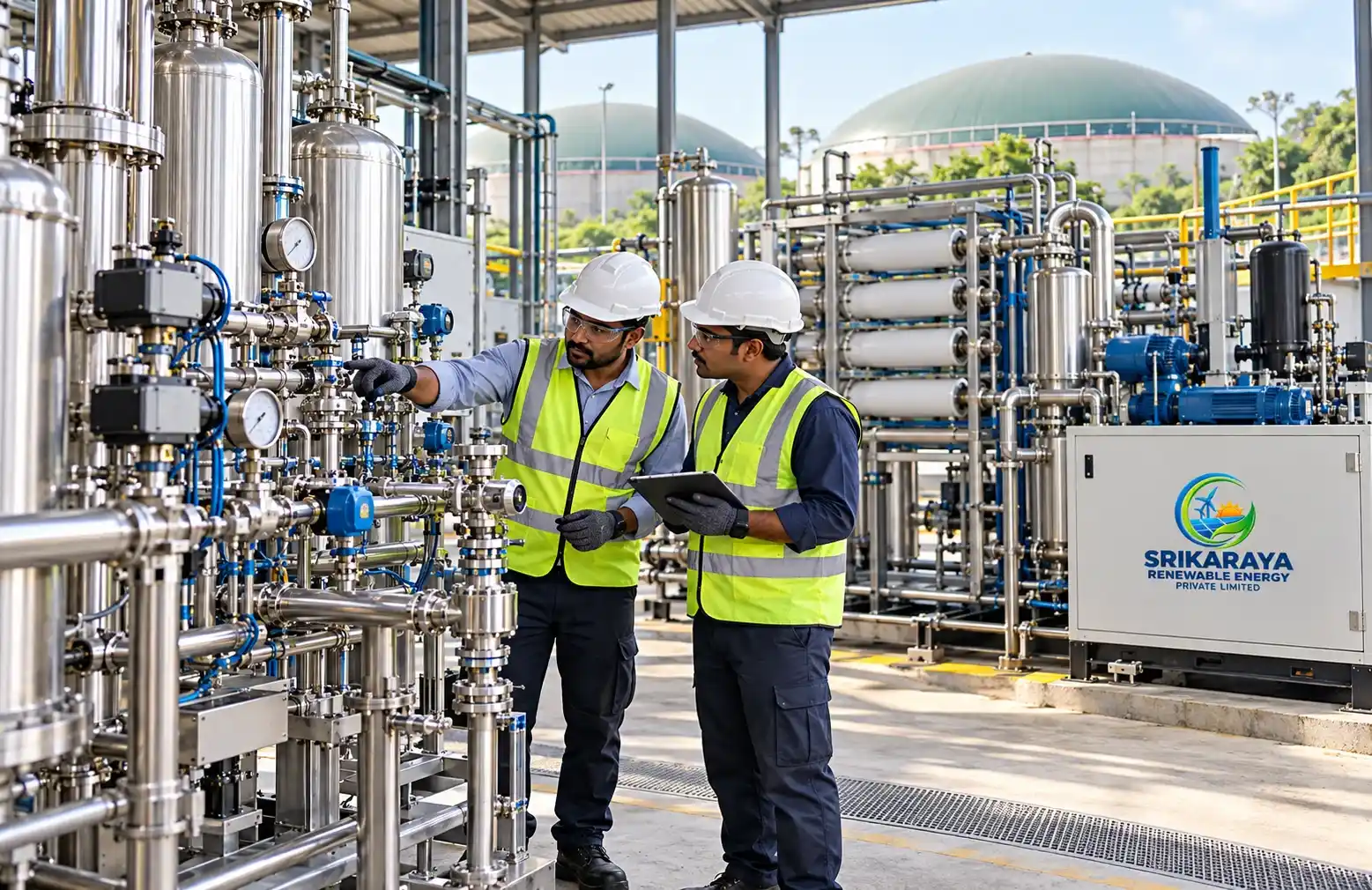
Our research team works on a simple question: how do we get more energy out of the same ton of waste, and make the result cheaper to run? The answers arrive incrementally, and they compound.
The laboratory sits alongside working plants rather than apart from them, which is deliberate. A result that holds in a one-litre bottle and fails in a digester is not a result. Everything that looks promising at the bench is trialled at pilot scale before it is allowed near an operating site.
Where the gains are coming from
- Co-digestion ratios. Blending feedstocks with complementary carbon-to-nitrogen ratios stabilises the biology and lifts methane yield well beyond what either substrate manages alone.
- Pre-treatment. Breaking down fibrous residue before it enters the digester makes more of its carbon available, turning material that used to pass through largely untouched into gas.
- Early warning. Digester health markers let operations teams correct a drift while it is still a small adjustment.
Catching problems earlier
A digester that is heading for an upset says so days in advance, if the right markers are being watched. Work on early indicators is letting operations teams correct a drift while it is still a small adjustment, rather than recovering from a souring afterwards.
None of this is dramatic on its own. Together, it is the difference between a plant that meets its rated output and one that quietly runs under it for years.
From Waste to Wealth: The Biogas Revolution
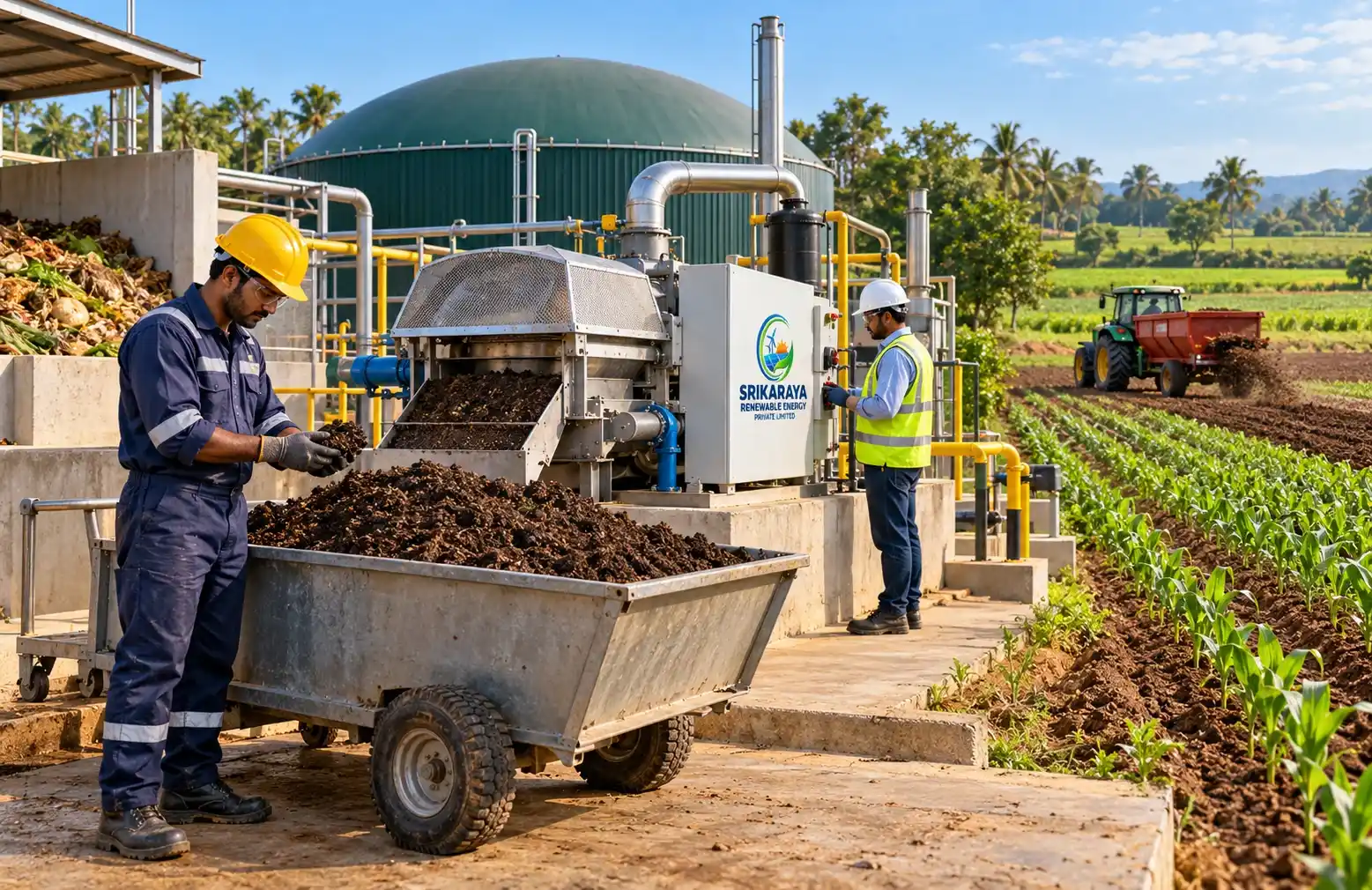
Organic waste has a disposal cost attached to it for as long as it is treated as waste. Digest it instead, and the same material becomes clean energy and valuable by-products — a circular economy in the most literal sense.
The arithmetic is what makes the argument, not the sentiment. A ton of organic waste going to landfill carries a tipping fee and produces methane that escapes to the atmosphere. The same ton through a digester produces gas with a market value, bio-fertiliser with a market value, and avoids the tipping fee entirely.
Three revenue lines from one input
- Bio-CNG sold into transport and industrial heat.
- Bio-fertiliser sold back to agriculture, displacing an imported chemical product.
- Avoided disposal cost — real money that no longer leaves the balance sheet.
For a mill, a hotel group or a municipal body, that turns a line item into an asset. It is the reason the conversation about waste is changing from what it costs to dispose of to what it is worth to process.
What has to be true for it to work
- Segregation at source, so the feedstock arrives clean enough to digest.
- An honest assessment of what that feedstock can actually yield.
- A plant sized for the supply that holds up year-round, not the peak.
Get those three right and the economics look after themselves. Get any of them wrong and no amount of technology will rescue the project.